
TrelCor® Technology
Dedicated to improving patient outcomes, Biogennix developed TrelCor as a next-generation synthetic bone graft material to support bone regeneration. TrelCor granules, featuring a nanocrystalline HCA surface with a biomimetic pore architecture, provide an enhanced osteoconductive scaffold that enables bone formation in soft tissue environments* without supplemental cells or growth factors.1‡
Nanostructure
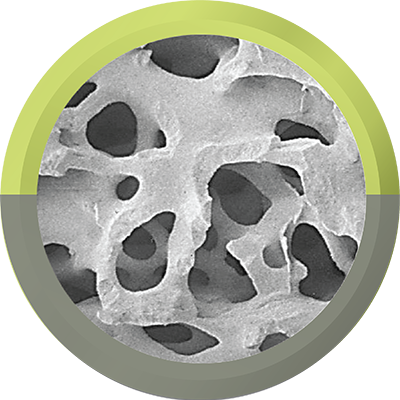
TrelCor advanced bone graft material features nanosized surface architecture and morphology that provides a unique surface for cell attachment that leads to bone formation. Compared to traditional synthetic bone graft surfaces, the nanocrystalline structure of TrelCor granules provides a highly textured surface to its surrounding environment. Images below show TrelCor’s nanosized plate-like crystals at 20KX magnification.
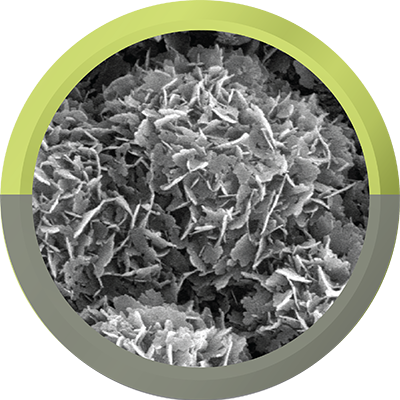
at 20,000X

at 20,000X
Surface Composition
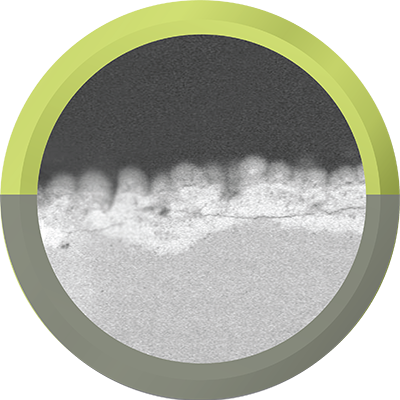
HCA is a a carbonated form of calcium phosphate that closely resembles the mineral content of bone, giving it advanced osteoconductive properties. A bone-like apatite layer forms on top of the HCA surface layer when exposed to simulated body fluid.1*

Cross-sectional SEM image of TrelCor’s distinct dual-region composition (1,000X)
Resorption
TrelCor bone grafts were designed with optimal resorption characteristics. Once implanted, TrelCor’s initial resorption occurs at a pace that gives the bone formation process enough time to fill in the porosity with new bone. Once this is complete, a secondary resorption process begins and quickly creates additional space for the final bone formation process to occur. This is possible due to TrelCor’s unique dual-region composition:
- A thin, slow-resorbing hydroxycarbanoapatite (HCA) surface layer which stays around long enough for new bone to form, and
- A fast-resorbing calcium carbonate (CC) core which resorbs only after substantial bone growth has already occurred
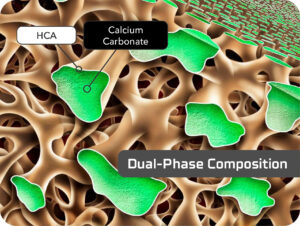
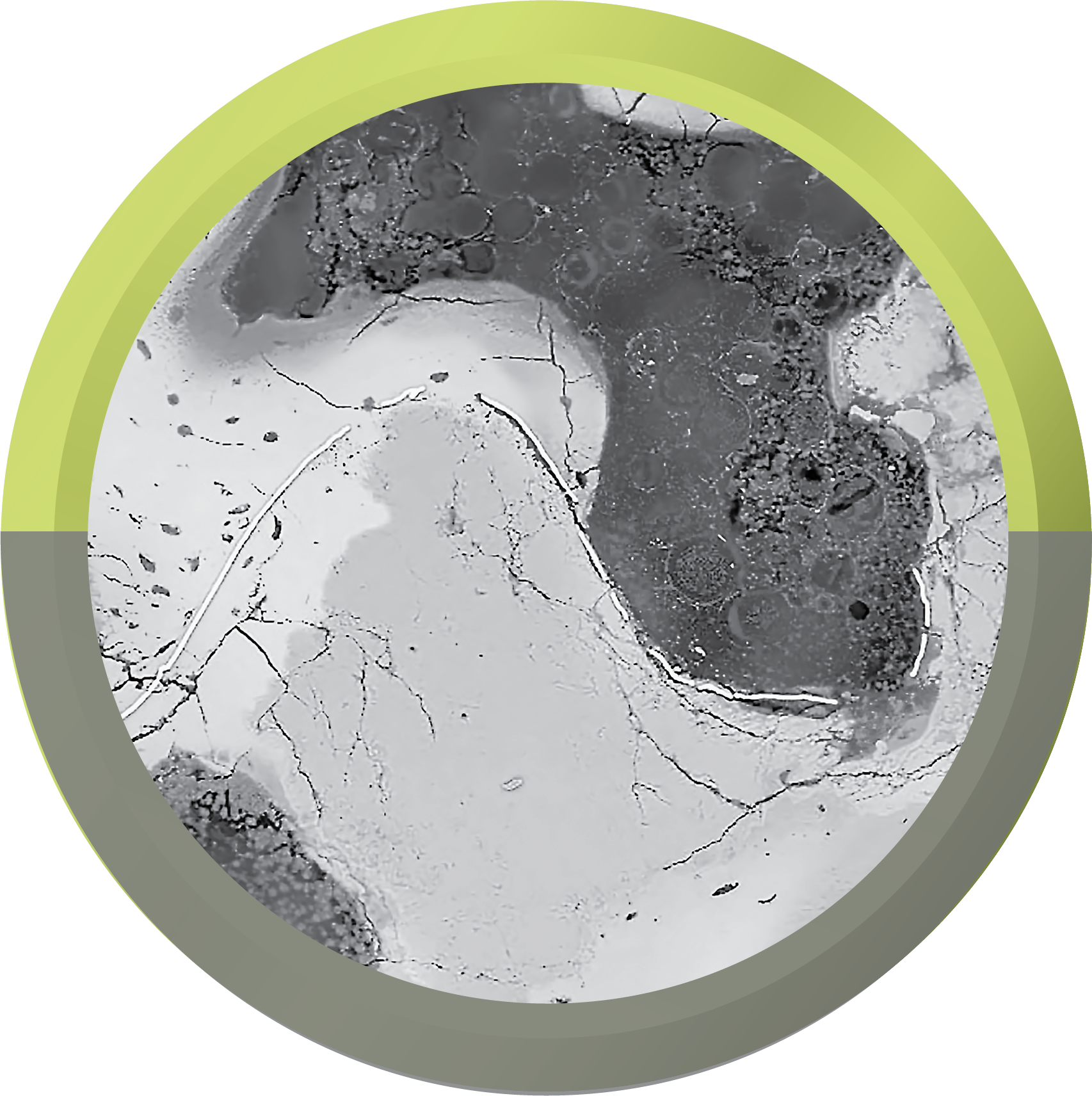
At 12 weeks†‡, prominent bone growth (yellow) is visible on the surface of the TrelCor granules while also penetrating into the calcium carbonate area. This timepoint depicts both the initial resorption of the HCA layer and penetration of new bone into the calcium carbonate region.
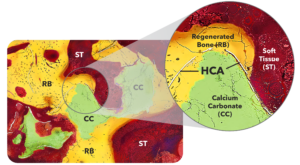
Histology image showing TrelCor resorption and new bone formation.
Porosity
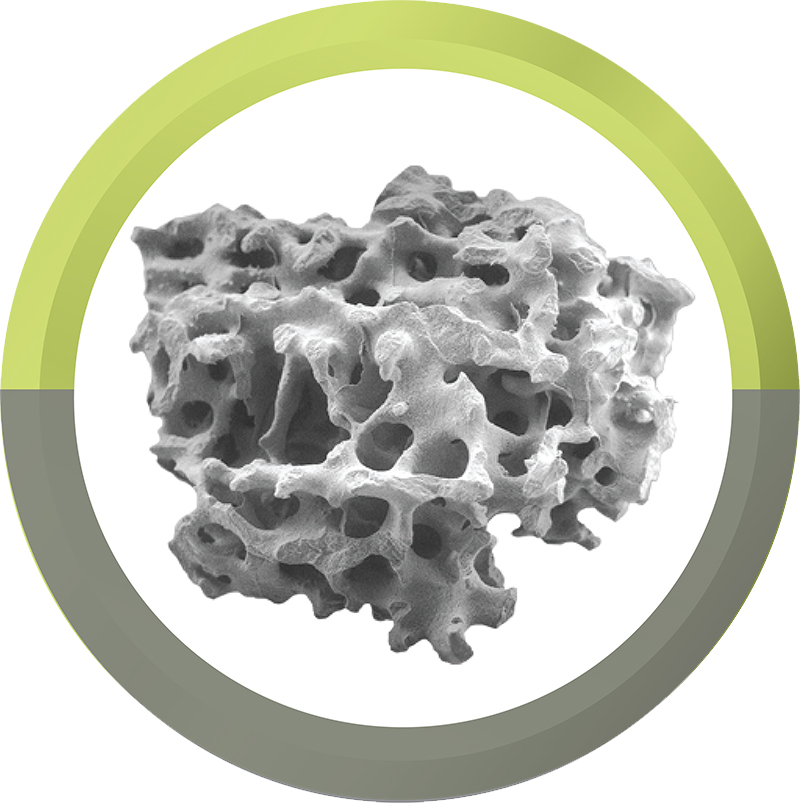
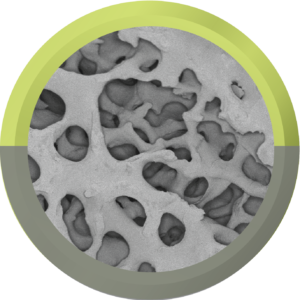
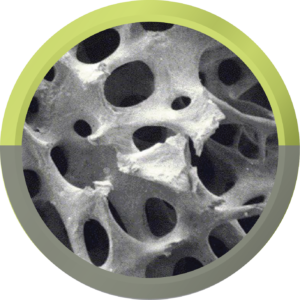
TrelCor has a unique biomimetic structure that closely resembles human cancellous bone. With an average pore size of 500µm, the TrelCor structure provides an optimal pore system to support bone formation. Its 100% interconnected porosity and uniform pore shape deliver a directly accessible pathway to the interior of the graft site.
The combination of these features allows TrelCor bone grafting products to function as a highly effective scaffold that supports new bone formation throughout the entire implant area.

TrelCor “Expressway” – Cross section of TrelCor granule showing 100% interconnected porosity, allowing cellular and vascular access throughout the graft.
References and Disclaimers
1. Borden MD, et al. J Biomed Mater Res B Appl Biomater. 2024;112(5):e35416.
* In an in vivo sheep muscle pouch model.
† In a pre-clinical in vivo rabbit bone defect study.
‡ Pre-clinical test data are not necessarily indicative of clinical performance.